EV
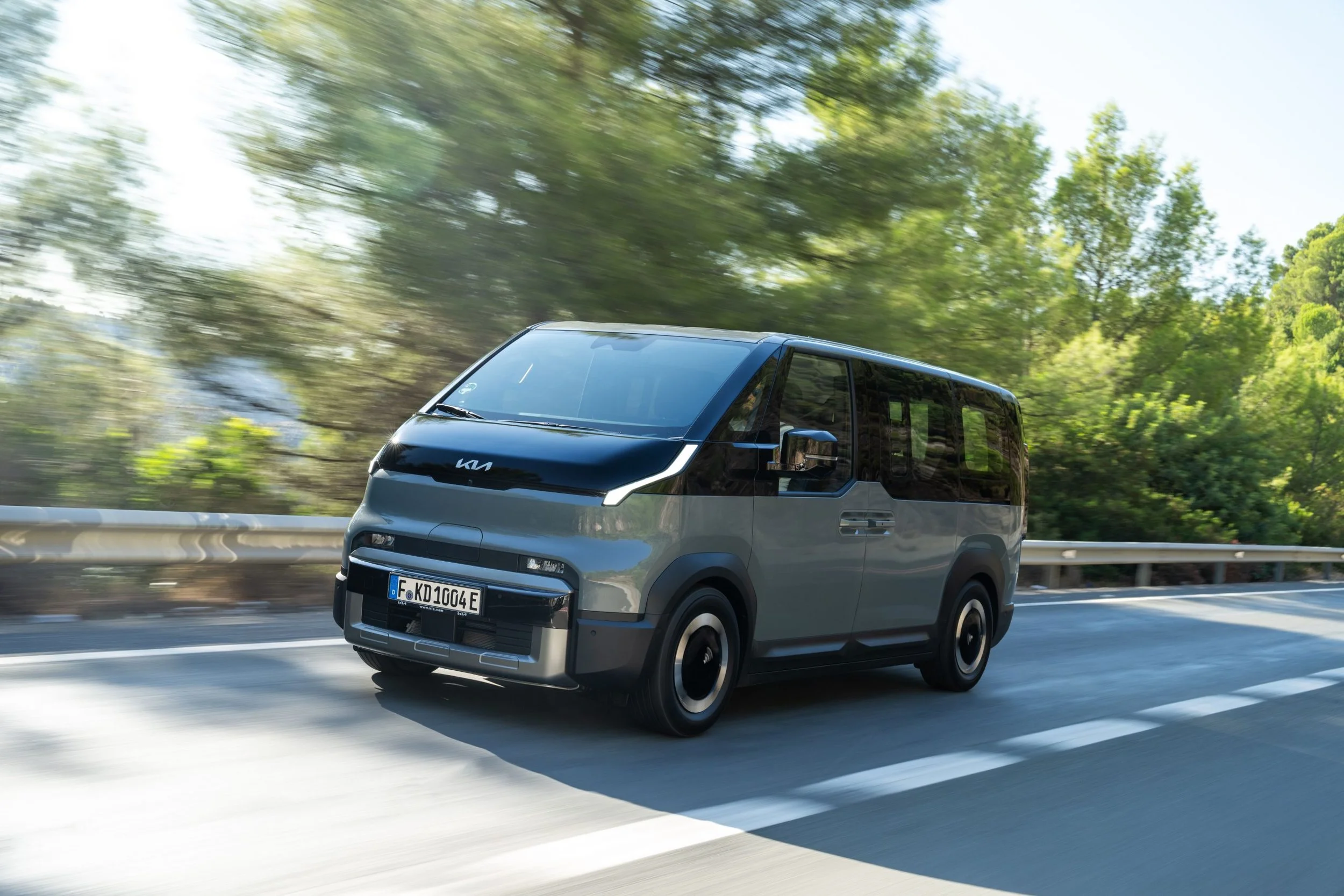
Kia PV 5
I operate a dedicated electric production vehicle which, on the surface, is simply a well-organised, spacious van capable of transporting equipment and crew. In practice, it has become much more, acting as a mobile production base that allows camera, power and supporting kit to travel together and be accessed quickly on location.
The vehicle has supported productions in meeting environmental and sustainability specifications. It also offers a lower running-cost alternative to traditional internal combustion engine vehicles, reducing fuel and operational overheads. Beyond transport, the platform functions as a practical mobile workspace for camera workflow tasks, including battery management, media handling and location power.
Specifcation:
71.2 kWh battery, 250miles on a full charge and 10–80% Charge in 30 minutes.
0g/km CO₂, supporting sustainability frameworks or low-emission zones.
Cargo volume 4.4m³ load capacity.
Load length 2255mm.
Load width 1565mm.
Load height 1520mm.
Payload capacity 700kg
Exterior length 4695mm.
Exterior height 1920mm.
Manageable footprint for car parks, underground facilities and restricted access sites.
Vehicle-to-Load (V2L) – internal and external V2L power capability via Type 2 adapter, enabling direct power output from the vehicle battery for supplementary on-location equipment with vehciles doors closed and locked.
Anton Bauer EDEN 2.5kWh mobile power station onboard for AC and DC power.
Practical
The van provides a generous, organised space for transporting camera, lighting and support equipment safely and efficiently. Its size allows essential kit to travel together, reducing the need for multiple vehicles and simplifying load-in and load-out on location.
The open and adaptable interior makes it easy to configure storage around the needs of each project, whether prioritising camera, lighting or grip. Equipment can be packed securely, accessed quickly and managed systematically throughout the day, supporting efficient workflow without unnecessary scale.
Sustainability
As a fully electric vehicle, it supports lower-emission operation on location and enables access to urban areas where environmental restrictions apply. For productions with sustainability targets or environmental reporting requirements, it can contribute toward meeting those specifications.
Beyond emissions, the vehicle reduces noise and eliminates the need for idling engines during load-in, load-out and on-set standby. The aim is not to overstate impact, but to provide a practical, lower-footprint alternative where it makes sense.
Power
The platform supports on-location power requirements for camera, lighting and supporting equipment, allowing battery charging and power requiremntsto continue throughout the shooting day. This reduces downtime and supports longer setups without relying solely on fixed site power.
The system is designed to enable work in environments with limited infrastructure, including remote locations or sites where mains access is restricted. It provides a controlled and reliable approach to power management without introducing the noise or operational footprint of traditional generators.
Scale
The vehicle is designed to support small and mid-scale shoots, providing infrastructure without unnecessary complexity. Where a larger unit, lighting truck or additional technical vehicle is required, I work alongside the appropriate departments to scale the production properly.
The vehicle is not intended to replace specialist teams or infrastructure, but to complement them — offering a flexible, organised and lower-footprint solution that integrates smoothly into broader production workflows.

On-Board Power – Anton Bauer EDEN
The vehicle is equipped with an Anton Bauer EDEN mobile power station, providing a high-capacity, professional-grade battery solution for on-location use. Designed specifically for film and broadcast environments, EDEN delivers stable, regulated AC and DC output suitable for camera, lighting and data workflow requirements.
In practical terms, this allows battery charging, media management and small lighting setups to continue independently of fixed site power. It reduces reliance on generators and supports quieter operation in sensitive environments.
The EDEN unit is continually replenished while the vehicle is in operation via the internal 13-amp Vehicle-to-Load (V2L) supply. The van’s battery feeds the interior socket, which in turn maintains charge to the EDEN system. This creates a layered power structure: the vehicle charges the EDEN, and EDEN then powers internal battery chargers and supporting equipment. The result is a controlled, flexible power ecosystem that supports extended shooting days without unnecessary downtime.
Specifications:
Battery Capacity – 2.5 kWh (approximately 2500 Wh) lithium-ion battery system.
AC Output – 230V pure sine wave AC (UK compatible), suitable for professional battery chargers, monitors and small lighting fixtures.
Continuous Power Output – up to 2,000W continuous.
Peak Output – up to 3,000W surge.
DC Outputs – Multiple regulated DC outputs suitable for broadcast and cinema accessories.
Recharge Time – Approximately 4–5 hours from 13amp supply.
Weight – Approx. 22 kg.
Integrated Display – Real-time power monitoring and battery status.
Silent Operation – No combustion engine, suitable for sound-sensitive locations.
Coffee
Alongside camera and power infrastructure, the vehicle carries a dedicated coffee setup built around a Sage Brewer and Grinder. Beans are supplied by Duda Coffee, a small-batch speciality roastery based in the Cheshire countryside known for carefully sourced Latin American coffees, defined flavour profiles and a focus on quality and sustainability.
Film crews undertake long days, early starts and unpredictable environments. A consistent, well-made cup of coffee at call time has a huge impact on morale. It creates a small moment of calm before the pace of the day takes over and offers something thoughtful to crew and clients alike; especialyl when wrking off grid.
This small luxury allows fresh coffee to be prepared on location without reliance on service stations or disposable waste. Reusable cups are standard, reducing unnecessary packaging while maintaining quality and consistency. It’s a small detail, but details matter.