Japan - Juju, Slicks & Love Hotels
When I was a kid growing up in South Yorkshire, Japan felt like the furthest place from home.
Not just in miles. In mood. In rhythm. In the way a place can exist in your imagination long before you ever set foot there.
It was the country I saw in photographs, books and documentaries and quietly filed away as somewhere alien. Somewhere impossibly distant. That eclectic mixed of Pink Neon and Shinto shrines. Vending machines and mountain roads. Silence and noise - very muchy sitting right next to each other without any need to explain themselves.
Michael Palin’s Around the World in 80 Days probably has a lot to answer for. So does Lost in Translation. So do years of looking at pictures of Tokyo streets at night and wondering what it might feel like to be there, jet-lagged and slightly lost, following your curiosity down a side street because the light looks good and the smell coming from a tiny restaurant is enough to ruin whatever dinners plans you thought you had. Oh yeah, and Anthony Bourdain, he has alot to answer for.
At one point I studied the language. I practised a Japanese martial art for years. Before Covid, I was close to making a documentary there. I think I’ve always been drawn to cultures that feel very different from my own, partly because they offered an escape from the life I had and partly because they offer a kind of structure. My time in the military gave me discipline when I probably needed it most, and I think Japanese culture, particularly martial arts, gave me another version of that. A framework. A way of paying attention to the details.
So to finally get to Japan, and to shoot there felt quietly significant.
This film is a portrait of Juju Noda, Japan’s first female racing driver to compete in Super Formula, captured between the calm of her hometown in Okayama and the intensity of race day at Suzuka Circuit.
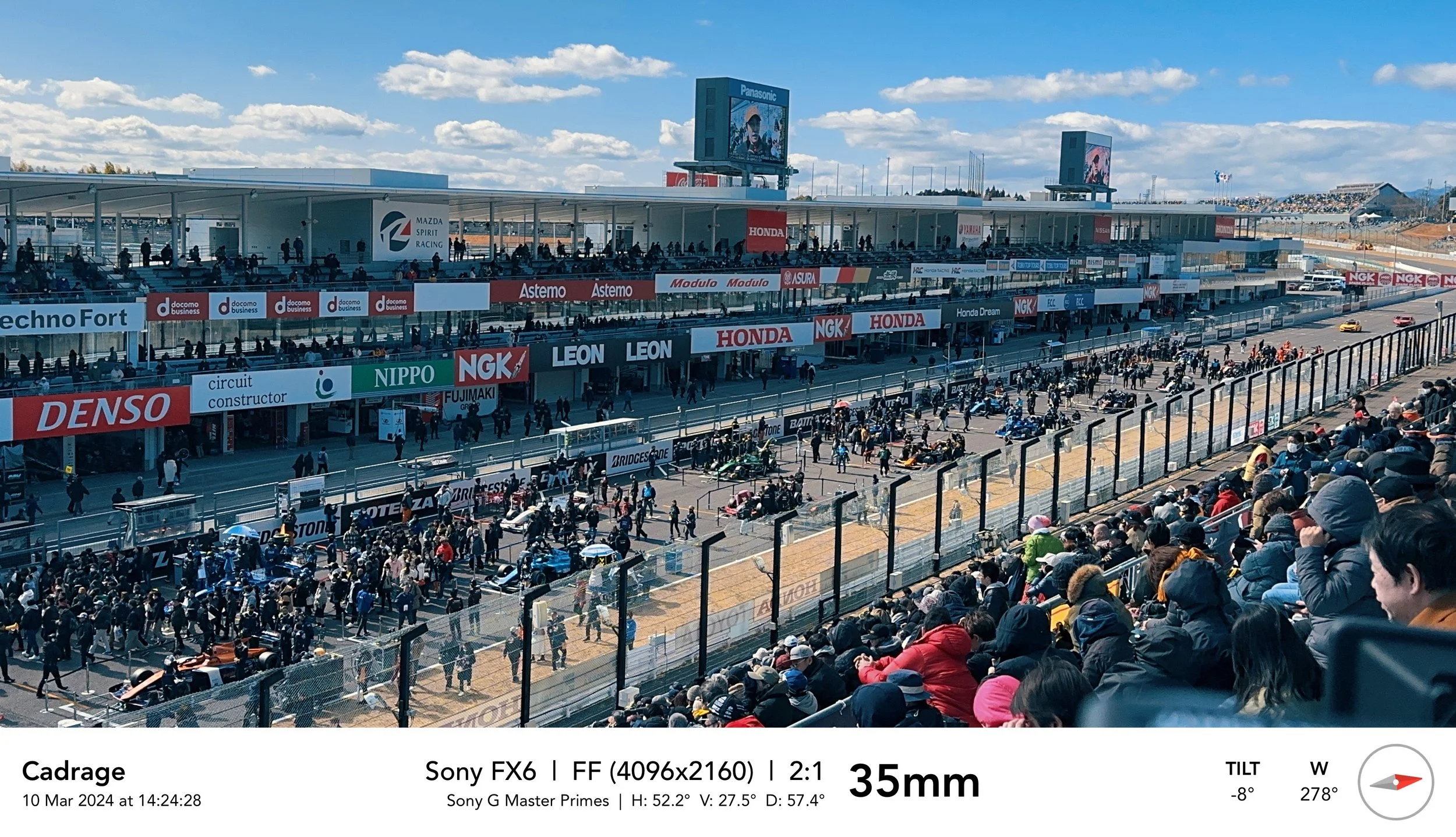
Lens Choices
It is a personal, upbeat look at her journey so far and where she wants to go next, told through a mix of archive footage, in-car material and newly shot material. James Copson and I filmed over several days, moving between Juju’s home life in Okayama and the high-pressure environment of Suzuka, with a two-camera setup built around the Sony FX6 and FX3, using G Master lenses and Cooke SP3s.
At Suzuka, we kept one camera mobile around the pit lane while the other moved between trackside positions for cutaways and circuit coverage. Back in Okayama, the in-car sequences were shot on a gimbal rig as Juju drove through her hometown, giving us something more relaxed and intimate. For the home scenes, the Cooke SP3s brought a softer, more characterful Panchro feel, helping separate Juju’s personal world from the speed, noise and pressure of race day.
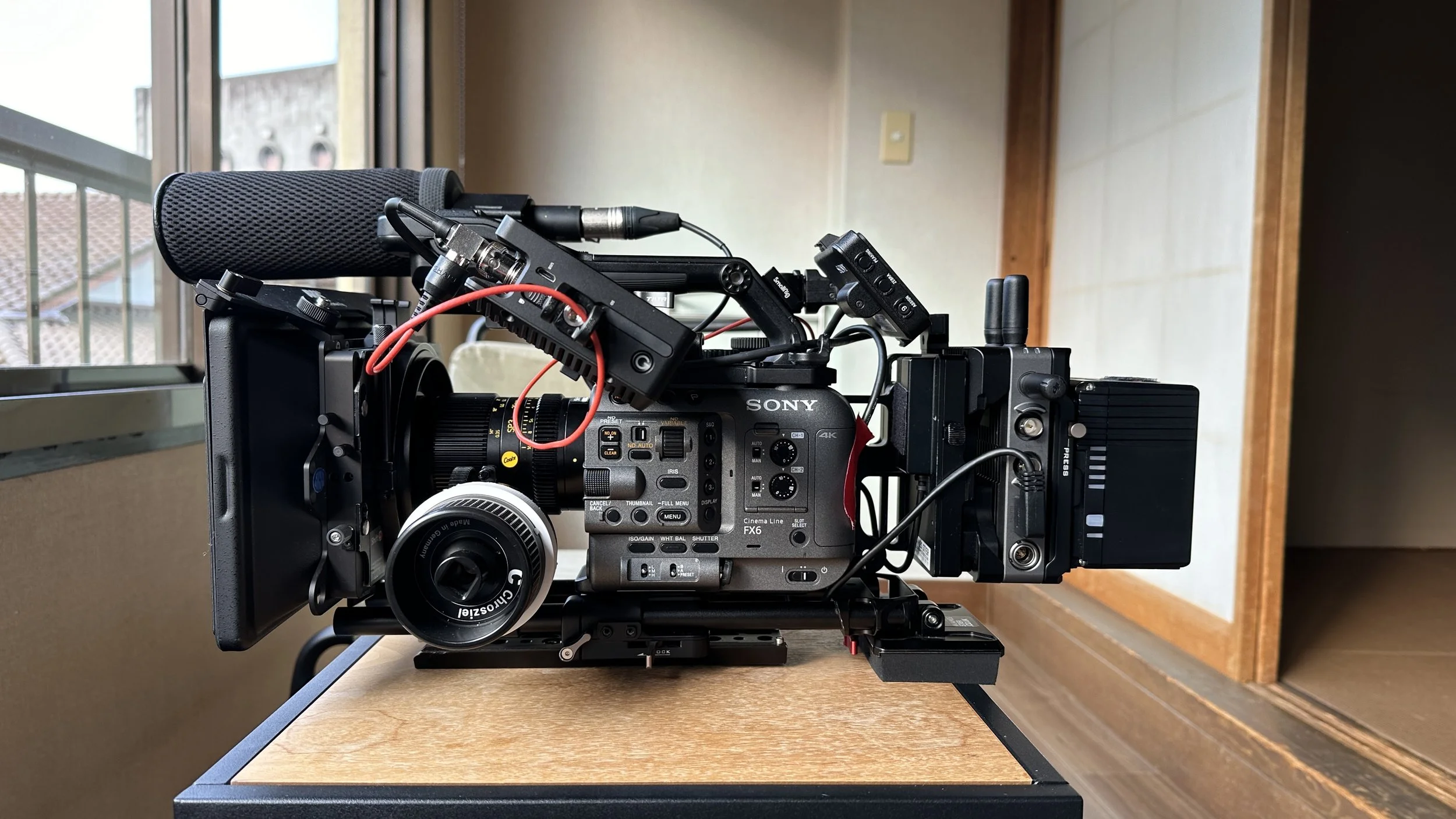
FX6 Build with SP3s
As with most documentaries, what stays with you is not just the footage you shot, but the life that gathers around it.
Our fixer, Karin, was absolutely brilliant. One of those rare people who seems to make things possible before you have fully understood the problem. Calm, funny, practical, endlessly patient and completely unflappable in the way only a great fixer can be. The kind of person you want beside you when you are sleep-deprived, under-caffeinated and trying to work out how to move a small film crew through a country that is both beautifully ordered and constantly surprising. She is awesome!
She also booked us into a love hotel.
Which, from a British perspective, sounds like the beginning of a much stranger story than it actually was. In Japan, love hotels are far less taboo than they might be back home. Often used by couples, sometimes by the hour, sometimes simply because they are available, discreet and practical. In our case, it was the only hotel left in town. Suzuka during race week is not a place to be casual about accommodation.
Still, there is something wonderfully absurd about hauling cameras, tripods, batteries and cases through the corridors each morning, nodding politely at guests who probably hadn’t expected to encounter a film crew on their way through the lobby. It was a perfect little piece of culture shock. Strange, funny and oddly… well odd. One of those moments where travel reminds you that the world is not obliged to organise itself around your expectations.
Then there were the quieter things. Being invited to dinner with Juju and her family. The generosity of it. The warmth. The food appearing in waves. Drinks being poured. Stories being shared across the small gaps that language leaves behind. That lovely documentary feeling of being allowed, briefly, into someone else’s world.
The roads around Okayama. The landscape. The soft calm before the speed and volume of Suzuka. The discipline of the circuit. The noise in the pit lane. The peculiar intimacy of watching someone prepare to do something most people will never truly understand.
And then Tokyo.
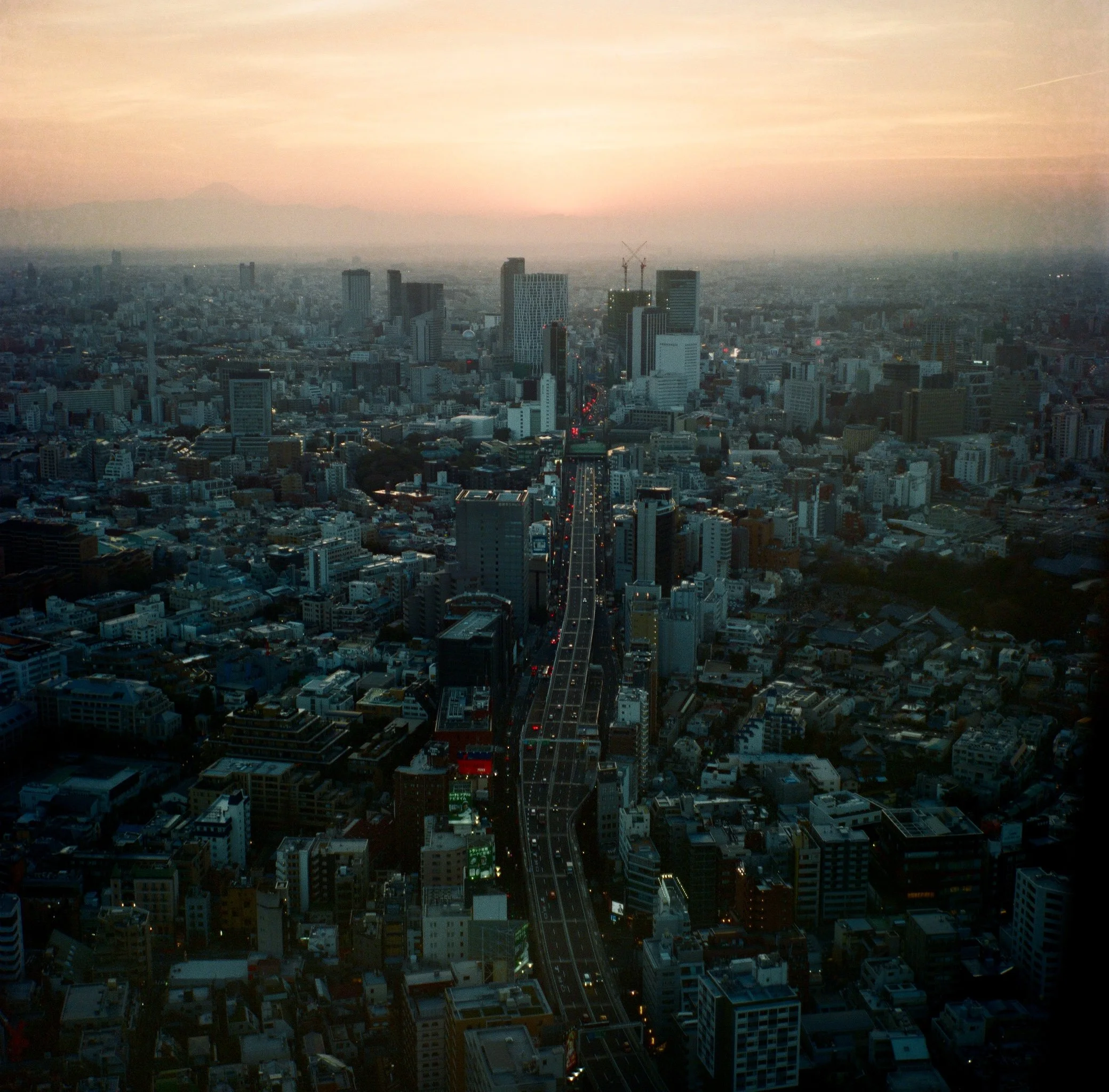
120 Photo of Tokyo from Mori Tower
Nights of food and drink in one of the greatest cities in the world. A place that can feel huge enough to swallow you whole, then somehow make the next doorway feel like a secret. Tiny bars. Late meals. Train stations that operate like choreography. Streets that seem to change character every few steps. The kind of city where you can be exhausted, full, half lost and still not want the night to end.
That is the joy of this kind of work. You go to make a film, but the film becomes the excuse. The real gift is being able to step into lives, places and cultures you would otherwise only ever see from the outside.
People used to ask me how I made the documentaries I made - at least the two I directed way back when. The honest answer is that I just started to make them. Years ago, I wrote a letter to the before mentioned Palin asking how he made his documentaries and whether he had any advice. Michael never called me back, but his secretary did. She spent a long time on the phone telling stories, offering encouragement and explaining that, in the end, Michael just went out and did it. Even if that meant taking a risk.
That stayed with me. A few years later, I was following in his footsteps in the Himalayas, then making a film of my own. A huge step for a shy Yorkshire kid who had barely left the country.
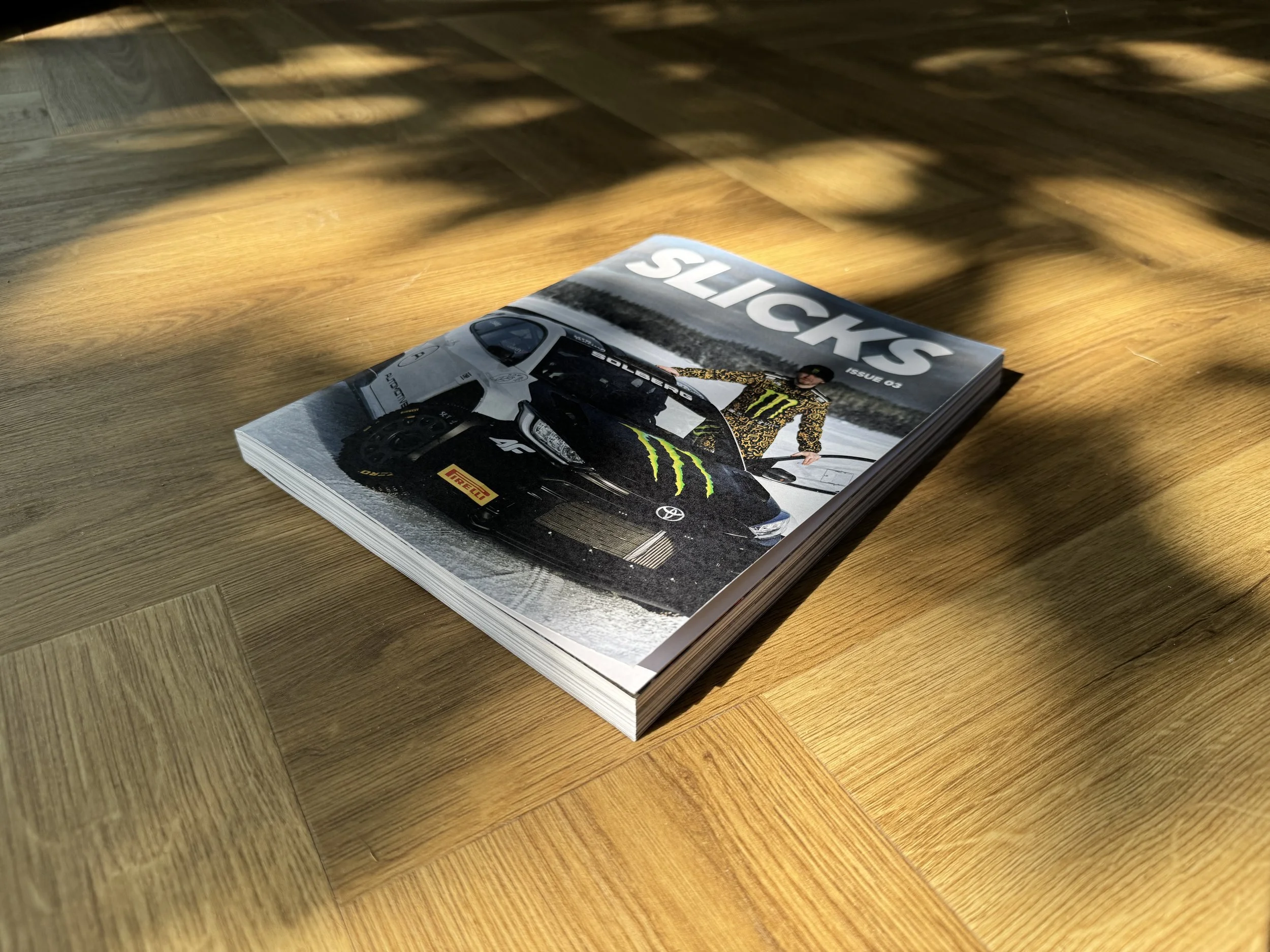
I suppose that is still the advice I believe in. If the idea is strong enough, if it keeps coming back to you and you believe in it with enough conviction, you have to find a way to get out there and do it and thats just what this projects director, James Copson did. Bravo James for taking a risk and making something you believe in. Its great to have our film out in the wild, especially in association with SLICKS magazine.
Huge thanks to the great and powerful James Copson for asking me to shoot this with him, and to Karin for keeping the whole adventure moving.
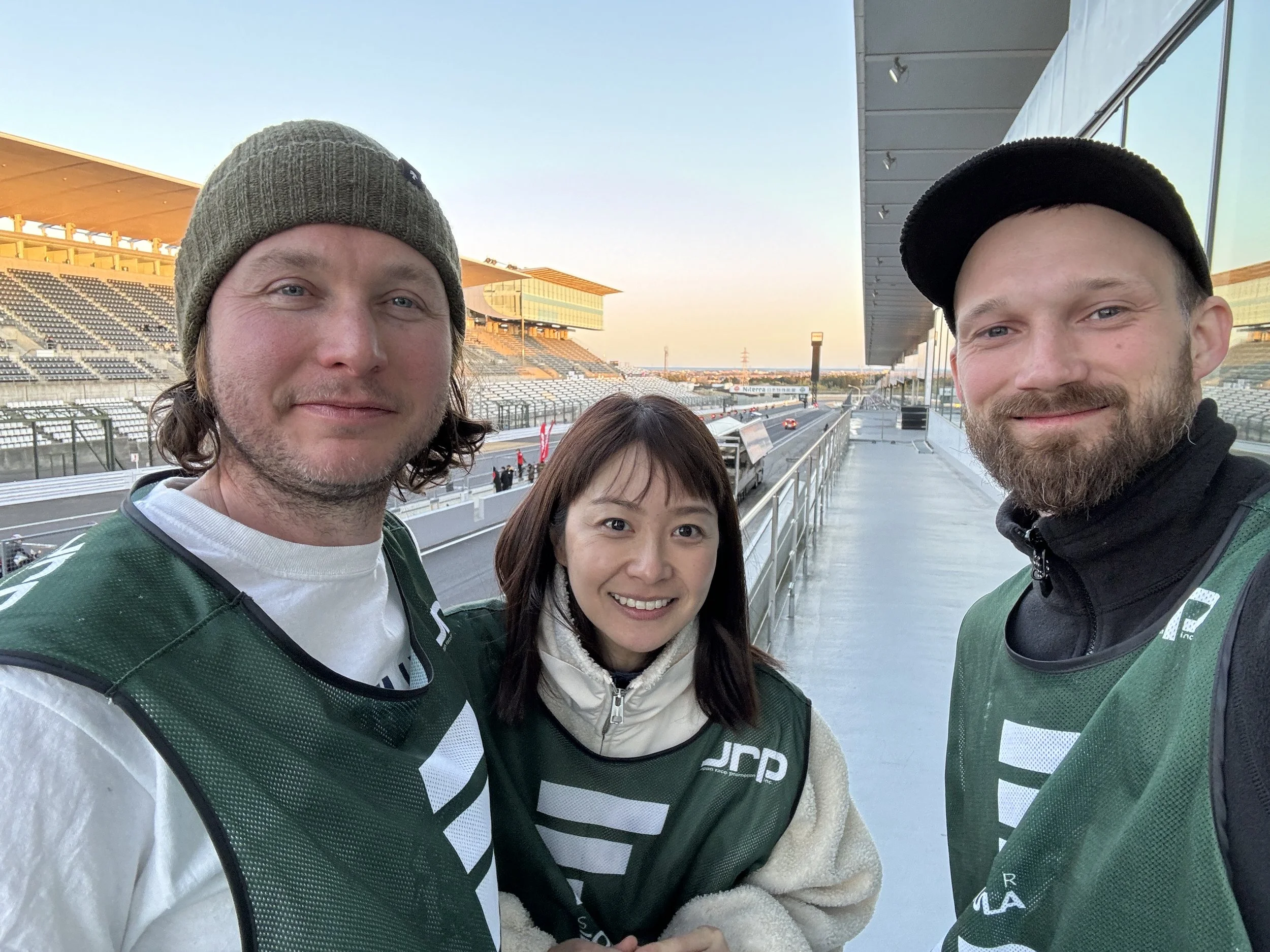
Me, Karin & James