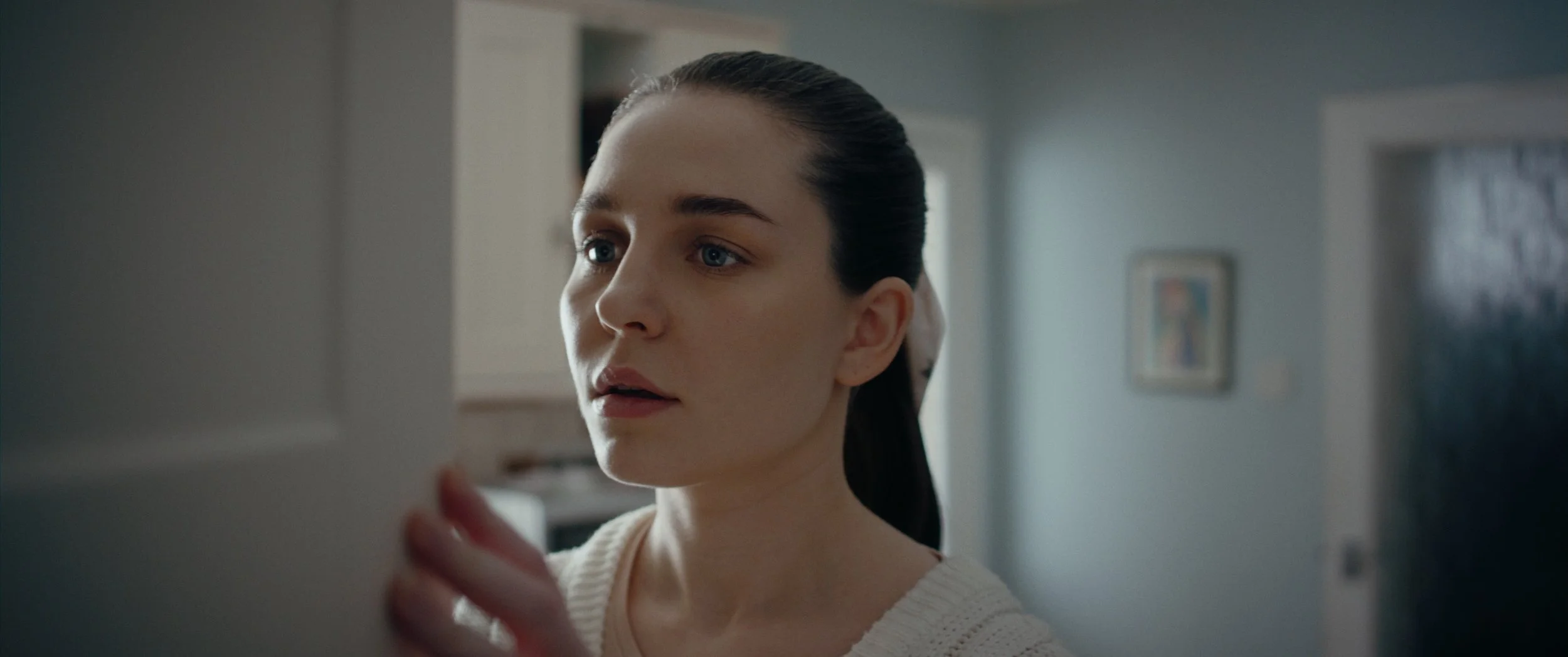
CUP - Rats, Short Film by Matthew Summer
Red S35 6k @ 21mm Cooke S4i @ 2.39:1
I think about lenses, or more accurately focal lengths, probably more than I should; and especially, I know, I should get out more. But after spending a good part of my life looking through them, I've developed some fairly strong opinions about what works, what doesn't and why - at least for me. And the older I get, the less patience I have for the rules about what certain focal lengths are supposed to mean.
I've worked on projects where the brief is familiar enough. Get on a longer lens, dirty up the foreground, introduce a little movement, shoot everything at 50 or 100fps and you've got yourself something cinematic. And sometimes you have. Sometimes it's exactly what the image nears, but in my vbeiw rrley what the story is calling for. Its the a point where it starts to feel like a recipe. A handful of reliable ingredients, thrown together because they've worked before, rather than because anyone has stopped to ask whether they're right for the job at hand.
Narrative work has its own version of this. Get into coverage, stick a couple of longer lenses either side of the eyeline, shoot your matching overs and move on. Everyone's happy. The editor and director have their options. Nobody's getting fired.
And look, there's nothing inherently wrong with any of it, we’ve all been there and choosen to do it. These conventions exist for a reason, and in the right hands they can be bloody effective. But increasingly, I find myself less interested in the familiar tricks. Not because they don't work, but because they work almost too easily. They become habits. Safe choices dressed up as creative decisions.
What interests me more are images that feel considered without feeling contrived. Where the camera seems to have found its place in the world rather than been positioned according to some well-worn formula. Images that have a reason to exist beyond simply looking good. I don’t know, maybe that all sounds a little ‘bougie’ or pretentious - but so be it, I care about this stuff.
And the more I think about it, the more I realise that choosing a lens isn't really about focal length at all. It's about where you decide to put the camera. And perhaps more importantly, why.
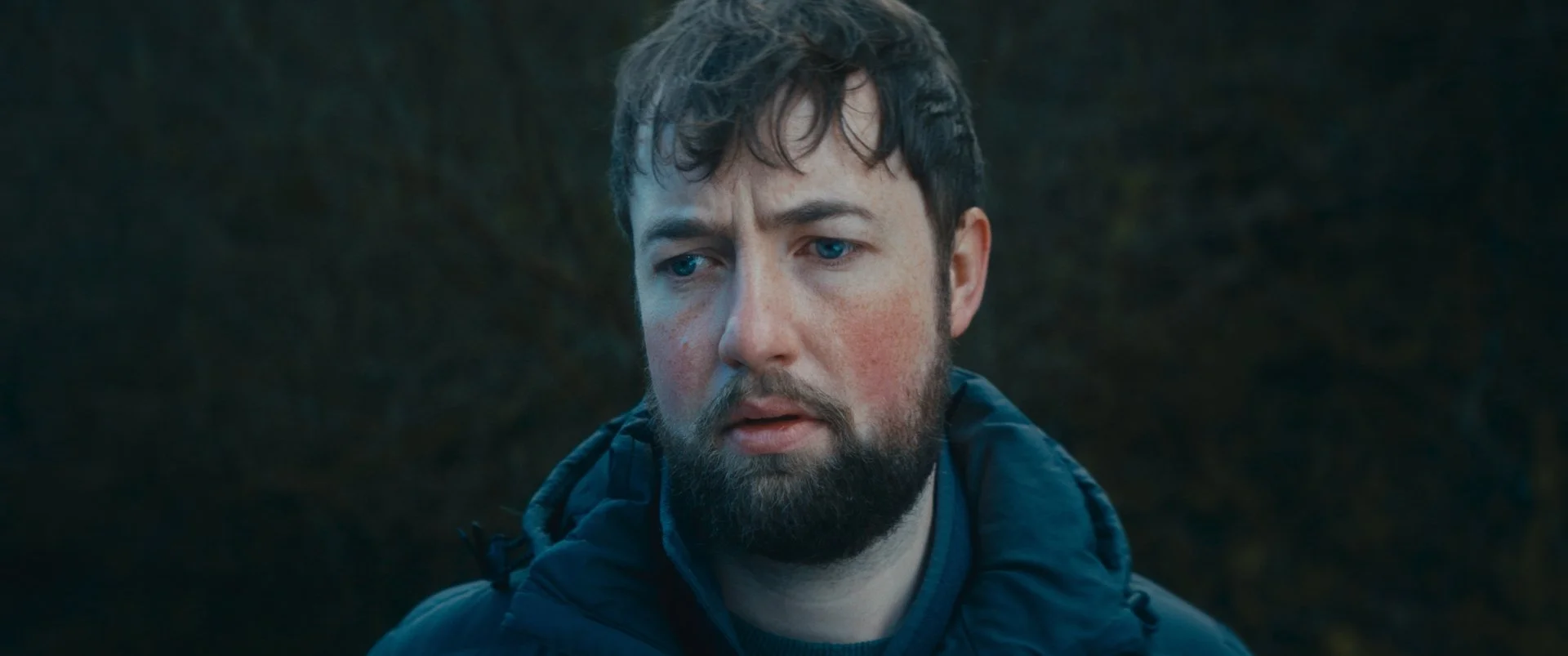

Camera Position - A Closeup on The Last Hike / BTS Photography by Danny Thompson
Venice 6k FF @ 1.3× 50mm @ 2.39:1
Moving to full frame has made me think about all of this more. I was a die-hard Super 35 shooter for years, and while we can can get the same field of view adn essetnially the same image on S35 with a wider lens, that's not the point.
What I've discovered in my own work is that I like what full frame has encouraged me to do. I've found myself moving the camera closer to people. Getting into their space a little more. Not necessarily in their faces, although that cna happen, but close enough to feel present rather than merely observing from a comfortable distance. There's an intimacy to that which I've come to really appreciate.
We cinematographers have a habit of talking about lenses as though they're characters in their own right. A 21mm is wide. A 50mm is natural. An 85mm is intimate. But I've become less interested in the engraved numbers and more interested in a considerably simpler question. Where should I be?
Should we be right there beside someone, sharing their space? Or across the room, watching them from a distance? Close enough to catch the smallest change in expression, or far enough away to understand the world they're living in?
Those are far more interesting questions to me than whether something ought to be shot on a 35mm or an 85mm. Once I've worked out where I want the audience to stand, the lens becomes a means of getting the framing right. Important, certainly, but no longer the starting point.
Take a portrait for exmaple; photograph someone from several metres away on a longer lens, then walk right up to them, put on something wider and keep their face roughly the same size in frame. On paper, you've achieved a similar composition. Same person. Same size. Except it isn't the same image. Not remotely.
Move closer and the relationship between the nose, ears, shoulders and background changes. The differences in distance become more pronounced. Step back and those differences diminish. Faces flatten, backgrounds appear to come forward, and the world begins to arrange itself rather differently.
We call this lens compression, which is convenient shorthand but not quite the whole truth. The long lens didn't compress anything. Moving the camera farther away changed the perspective. The longer focal length simply allowed us to maintain the framing.
It's a distinction that might sound like the sort of thing cinematographers argue about over a pint, long after everybody else has sensibly gone home. And perhaps it is. But it matters. Because the distance between the camera and the subject isn't just a technical measurement. It's a relationship. And relationships change how we feel about people.
A film I keep coming back to is The Assassination of Jesse James by the Coward Robert Ford. I was watching it again recently, ostensibly doing a bit of research for a lens effect I was developing in post-production. A perfectly legitimate professional exercise, although I suspect I was also looking for an excuse to spend more time with one of my favourite westerns.
What struck me, again, was the patience of the camera.
It doesn't seem particularly interested in barging into every scene and demanding our attention. It gives people room to exist. They inhabit rooms, landscapes, doorways and those extraordinary layers of foreground and shadow. Sometimes we're close. Sometimes we're kept at a distance. But you always get the sense that where the camera sits has been considered.
There's a confidence in that restraint. The film doesn't constantly insist that we get closer to understand somebody. Sometimes the distance tells us more. And I find that far more compelling than simply reaching for a longer lens because that's what you're supposed to do.
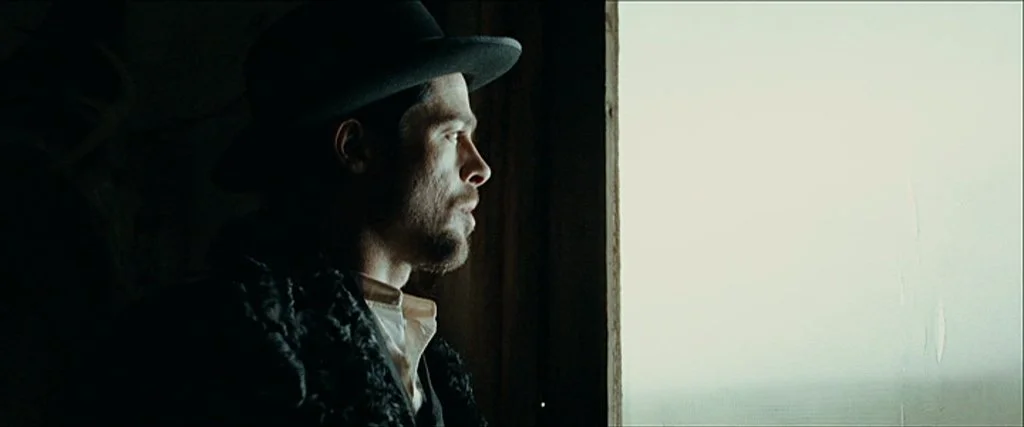
For a story built around observation, fascination and suspicion, that feels exactly right, no? Ford spends much of the film watching Jesse. Studying him. Admiring him. Trying, with varying degrees of success, to work out what makes the man tick. And as an audience, we often find ourselves doing much the same thing. We're not always standing beside Jesse. And really, who could? He's a man who seems to keep everyone at a distance, even when they're sitting at the same table. Sometimes we're simply somewhere else in the room, looking at him across a stretch of empty space, trying to make sense of what we're seeing.
That distance gives the image room to breathe. The architecture becomes important. The landscape becomes important. The people lingering at the edges of the frame become important. Jesse doesn't exist in isolation, conveniently separated from the world by a shallow depth of field. He's part of it, whether he likes it or not.
And when the camera does find him on a longer lens, we can see every detail of his face without necessarily feeling any closer to the man himself. He's right there in front of us, filling the frame, and somehow still out of reach.
Because there's a difference between seeing someone up close and actually feeling close to them.
That's the distinction I keep coming back to. Are we supposed to be observing this person, or participating in their world? Are we watching something unfold from a distance, or are we caught up in the middle of it?
If the scene calls for observation, perhaps the camera ought to stay back. Let the characters have their space. Let us do a little of the work ourselves. Once I've found that position, I'll worry about which focal length gives me the frame.
Now take The Revenant, photographed by Emmanuel Lubezki. A very different film, and a very different proposition.
Here, the camera frequently gets so close to the action that you can almost feel the cold coming off the screen. But what's remarkable is how much of the world remains present. Faces, trees, snow, sky, fire, weapons, bodies. Everything jostling for space in the same frame.
The environment isn't some attractive backdrop sitting politely behind the actors. It's right there with them. Occasionally threatening to swallow them whole. And that's an entirely different relationship between the camera, the characters and us.
With Jesse James, we can feel like someone watching from the other side of the room, trying to understand a man who doesn't particularly want to be understood. With The Revenant, we're often right there in the thick of it, with considerably less opportunity to keep our distance.
Neither approach is inherently better. But both remind me that where you put the camera can say an awful lot more than the number written on the lens.
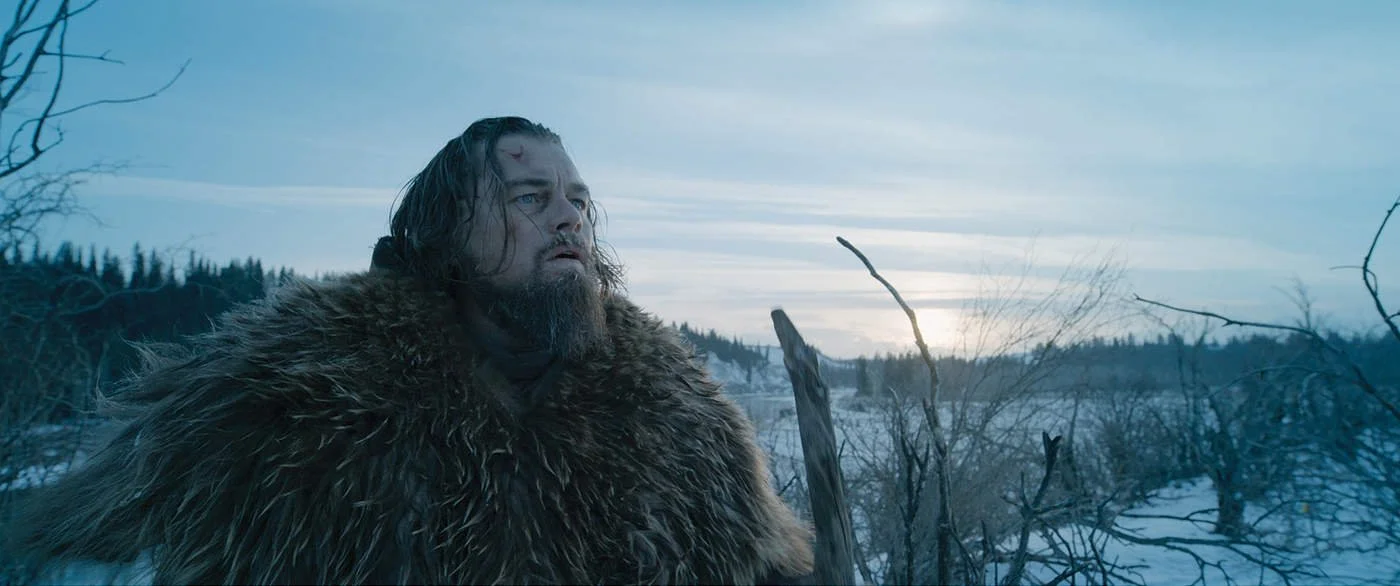
A wider lens certainly helps make that possible. But once again, it's not really the lens doing the interesting work. It's where you put the camera. Move thirty centimetres when you're ten metres from an actor and nobody's going to notice. Move the same distance when you're half a metre from their face and all hell breaks loose behind the monitors. The face changes size, the background shifts and that errant bottle of unsponsored alcohol suddenly rears its ugly head. Head office gets a phone call.
Everything in the frame becomes more sensitive to movement. And that, I think, is part of what makes The Revenant so visceral.
Yes, wide-angle lenses can introduce optical distortion of their own. But the exaggerated perspective we're talking about isn't some mysterious property of a 25mm, 18mm or 12mm lens. It's about distance. Move closer and the differences between the nose, ears, shoulders and background become more pronounced. Move farther away and those differences diminish.
Simple enough, but it can completely change how an image feels.
In The Revenant, the camera isn't simply watching people struggle through the wilderness. It feels as though it's been thrown into the same miserable predicament. Down in the mud, up to its neck in freezing water, dodging the occasional arrow and generally having a thoroughly unpleasant time.
You're not watching from the comfort of an armchair. You're in it. Whether you like it or not.
Compare that with Jesse James, where we're often kept at a distance, observing the characters rather than sharing their immediate space. Neither approach is inherently better, and neither is the only way to tell a story. They simply put the audience in different places.
Which brings me to something that increasingly irritates me about how we discuss lenses.
We've assigned them personalities. Wide lenses are immersive. Long lenses are intimate. Or detached. Or flattering. Or cinematic. Depending, presumably, on who's writing the treatment.
But a wide lens isn't automatically immersive. Put it at the far end of a room and it can feel positively clinical. A longer lens, meanwhile, can feel remarkably intimate when used from the right position.
The glass isn't doing the feeling for us.
I'd argue that the emotion comes from the relationship between the camera, the subject and the environment.
And there's someone else we occasionally forget about in all this.
The actor.
I became particularly conscious of this during my time loading cameras, watching performances unfold from the sidelines. Put a camera right up in an actor's face and they're going to know about it. There's an enormous piece of machinery, usually accompanied by several people, sitting uncomfortably close to their personal space. Hardly something you'd tolerate over breakfast.
Sometimes that pressure is exactly what a scene needs. It can create intensity, vulnerability or discomfort. It can reveal the smallest hesitation or change in expression.
But it can also become an intrusion. One more thing the actor has to negotiate while trying to do their job.
Move the camera back and you may give them room to breathe, to move and inhabit the space more freely. Move closer, with the right performer and the right scene, and you might discover a level of detail that would otherwise be lost.
Neither approach comes with a guarantee. Actors, rather inconveniently, are human beings and don't all respond to the same things.
It's why I don't think lens choice can be separated from blocking and performance. Where the actor moves, where the camera sits and which focal length connects the two are all part of the same decision.
Which brings me back, after all this talk of millimetres, perspective and occasionally tormenting our actors, to the question I find myself asking more than any other.
Where should the audience be?
Because audiences don't sit there calculating focal lengths. They understand proximity instinctively.
Someone speaking from across a room feels different from someone standing a metre away. And someone thirty centimetres from your face is either about to kiss you, punch you or ask for money.
Context, as ever, is everything.
A 25mm doesn't have an emotion. Neither does an 85mm. They're pieces of glass, not actors. What matters is where we stand, who we're standing beside and what that relationship makes us feel.
So I'm increasingly less interested in starting with What lens should I use?
I'd rather ask, Where should the camera be, and why?
Find that position first. Choose the lens that makes the image work. Block it, get everyone on board, then light it.
And if you haven't tried working a little closer than usual, give it a go. Not because closer is always better. It isn't. But because changing your physical relationship with the subject might reveal something you hadn't considered.
Sometimes the most interesting thing you can do with a camera isn't change the lens. It's take a few steps forward.